“[EmpathyLab] helps us build a school where every child is seen, valued and understood”
Charlton Primary School
Sustained impact
From our work with schools over the last 10 years, we know that an increased empathy focus through reading has a positive impact on children’s wellbeing in a number of different ways. In schools embedding our strategies – which are designed to be folded into reading work already taking place, rather than a bolt-on programme:
100% of teachers reported that children had developed a far better understanding of what empathy is, how it works and why it matters.
75% of teachers reported that children were calmer and less stressed
100% of teachers reported that children could more easily name and share emotions
87% of teachers said they had observed an increase in the frequency of children reading for pleasure
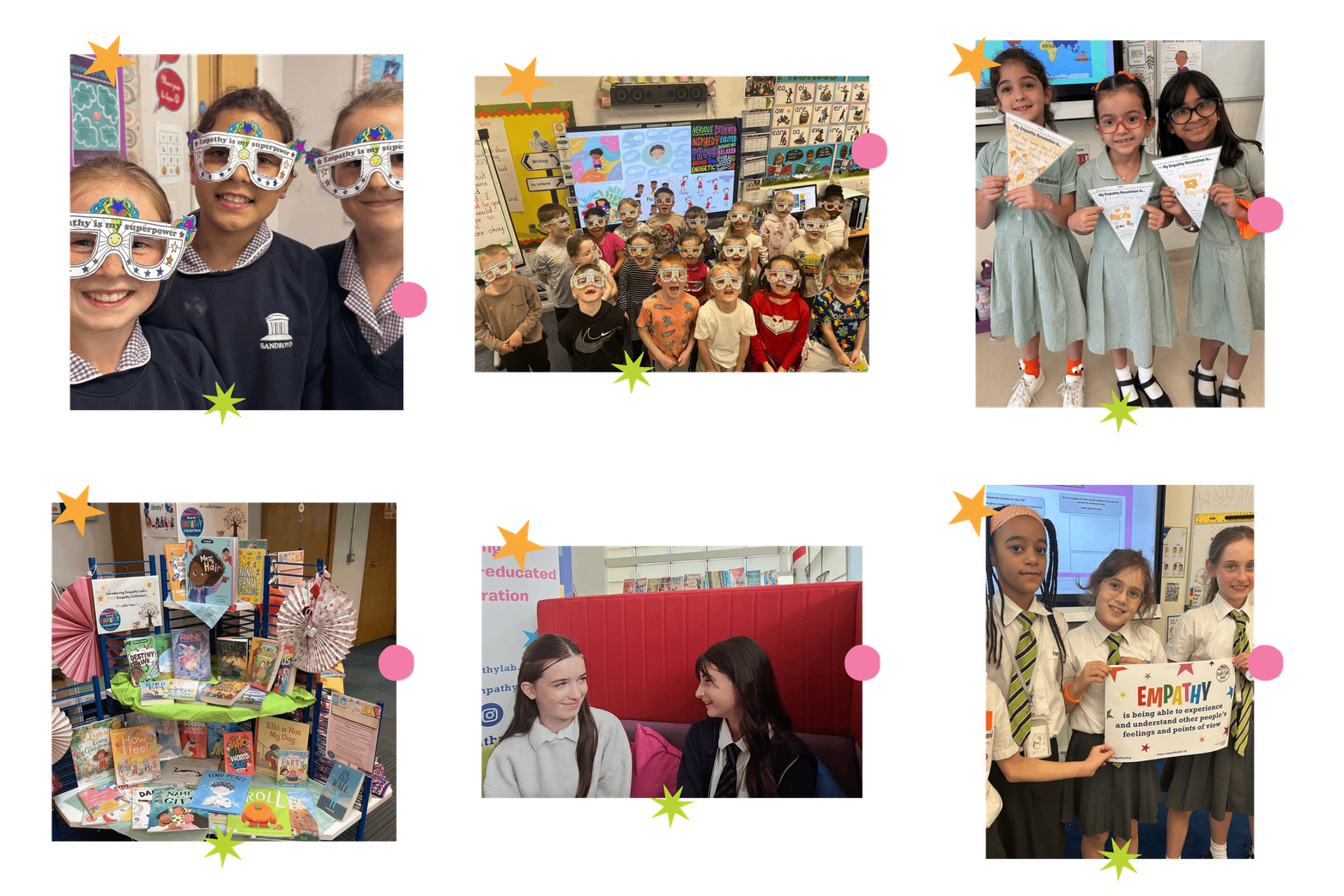
Our current Empathy Schools
(not all schools listed)
“If you are interested in fostering children’s well-being and building a more caring society, then there is good evidence that empathy should be a key priority. Research identifies empathy’s relevance to improving children’s behaviour, mental health, achievement and pro-social attitudes. It is not a fluffy thing, but a foundational life skill.”
Professor Robin Banerjee, Sussex University, Pro-Vice-Chancellor for Global and Civic Engagement
We want every child to benefit from a powerful reading-based empathy education.
Our approach provides a triple win
Reading for enjoyment increases, linked to greater academic and life chances for children, especially those from more disadvantaged backgrounds
Wellbeing improves, through emotional regulation, community connection, and social cohesion
Social action habits increase, creating active citizens who positively impact local and global causes
Headteacher, Sonia Thompson, on making empathy mainstream